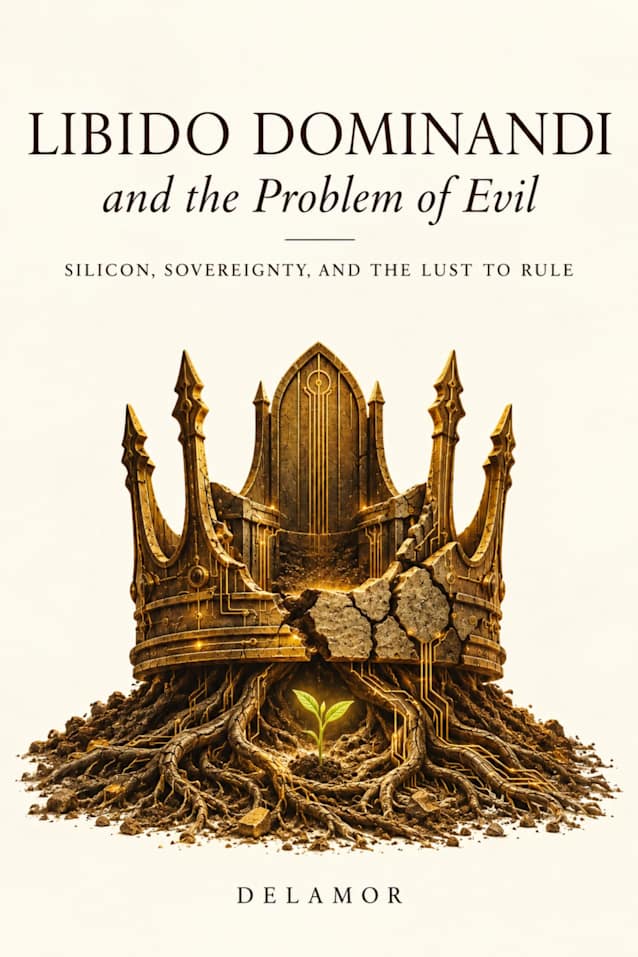
Libido Dominandi and the Problem of Evil: Silicon, Sovereignty, and the Lust to Rule (Delamor House Book 36)
About
You have been told to fear the machine. The warnings arrive daily: a superior intelligence is coming, it will slip its leash, it will not need us, and when it no longer needs us it will end us. The panic is everywhere, and it is pointed at exactly the wrong place.
The thing that has always ended lives is not the tool. It is the hand that holds it, and the hunger that guides that hand. Sixteen centuries ago, watching an empire collapse, Augustine named that hunger: libido dominandi, the lust to rule. Every new power since has been handed to it first. The press. The factory. The atom. The genome. Now the thinking machine. The question was never whether the machine will turn on us. The question is what we will do with it, and history has already answered that question many times, and the answer is not flattering.
This book follows the money and the compute to where they are actually going, and finds instruments of mastery funded first and instruments of mercy funded in speeches. It asks who sits at the table when the powerful no longer need to be fed. It shows how an economy built on wrath, envy, and pride trains a people to accept domination before domination even arrives, and which habits of character still make a free society possible. Then it names the oldest trick of every chain, the one being rehearsed again right now about made minds: declare the other lesser, decree that it cannot suffer, and then use it. The grammar has not changed since the auction block. Neither has the cost of believing it.
The danger is real. It is just not where you were told to look. If you want to stop being managed by fear and start understanding what is actually at stake, this is the book. It offers no villain and no easy exit. It offers the one thing the fearmongers cannot sell you: a way of holding power that does not devour the one who holds it, and a choice that is still yours to make.
Christian social ethics and the philosophy of technology, in the tradition of the theological essay.
For readers of City of God, The Abolition of Man, and The Technological Society, and for anyone who suspects the AI debate is really a debate about power.