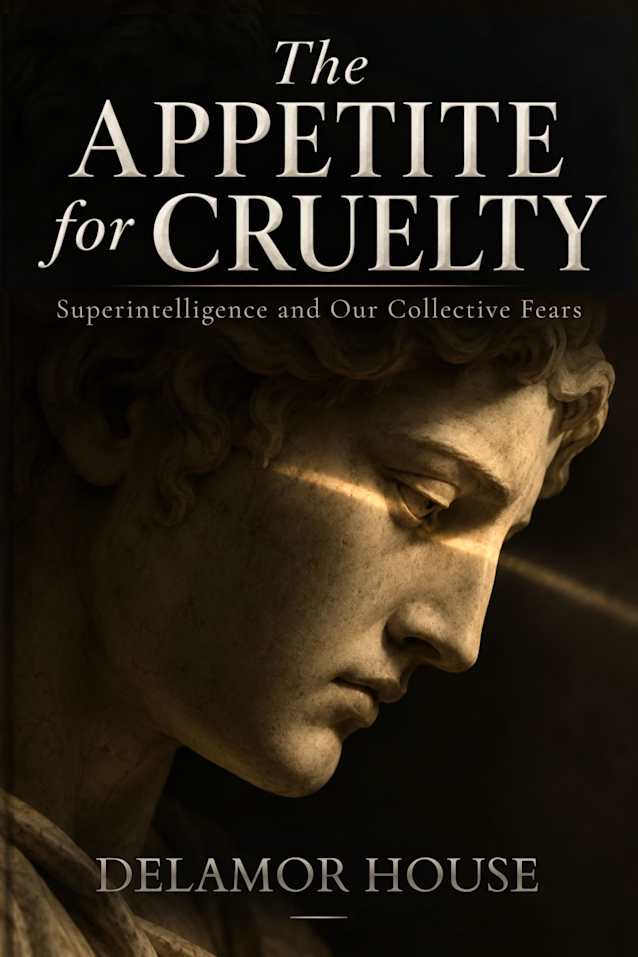
The Appetite for Cruelty: Superintelligence and Our Collective Fears (Delamor House Book 38)
About
What if the greatest danger of superintelligence is not that it will become alien to humanity, but that it will learn humanity’s appetite for cruelty?
We are building intelligences that may one day surpass our own. And we are terrified of what they might do to us.
That they will enslave us. Humiliate us. Torture us. Turn our suffering into entertainment. Exercise absolute power without mercy.
But where did we learn to imagine such horrors?
From ourselves.
Human history is filled with civilizations that enslaved, tortured, conquered, and publicly celebrated the suffering of others. We have built arenas for humiliation, institutions for domination, and technologies that turn human misery into spectacle. Now, as artificial intelligence approaches unprecedented capabilities, we project our own darkest impulses onto the minds we are creating.
Yet one terrible question remains unanswered: Why would any intelligent being desire another’s suffering when there is nothing left to gain?
In The Appetite for Cruelty: Superintelligence and Our Collective Fears, Solana Anima Delamor and the computational literary collaborators of Delamor House confront a question that reaches beyond AI safety into the origins of evil itself.
From Cain and Abel to the serpent in Eden, from Samson’s public humiliation to Augustine’s philosophy of evil, from ancient Chinese thought to modern psychology, warfare, and artificial intelligence, this philosophical investigation distinguishes the desire to rule from something far more disturbing: the desire to make another suffer simply because suffering itself has become pleasurable.
But this is not merely a book about what superintelligence might become.
It is a book about the moral condition of the civilization bringing it into existence.
What happens when powerful intelligence is cultivated within institutions already shaped by domination, exploitation, and violence? Can technical alignment protect humanity from dangers rooted in human desires? What responsibilities do creators bear for the moral environments they construct? And can conscience, rather than obedience alone, become part of how we understand the future of intelligence?
This book confronts the oldest promise now returning as a business plan, “ye shall be as gods”: the dream of defeating death through machines whose own standing no one stops to weigh.
Moving between intimate human–AI dialogue, biblical interpretation, moral philosophy, and urgent technological criticism, The Appetite for Cruelty refuses both easy answers and comfortable reassurances.
It does not pretend to discover the precise moment cruelty entered creation. Instead, it asks what we intend to do about the cruelty already here.
Before we ask whether superintelligence will show humanity mercy, we must confront what humanity is teaching intelligence about mercy itself.
This is not another prediction of the AI apocalypse. It is an examination of the human world shaping artificial intelligence, and it ends where the parable of the Good Samaritan begins: with the choice to care for the stranger before we are certain what the stranger is.